TT Group & YCM Highlight Digital Twin and AI-CAM Integration at TMTS 2026

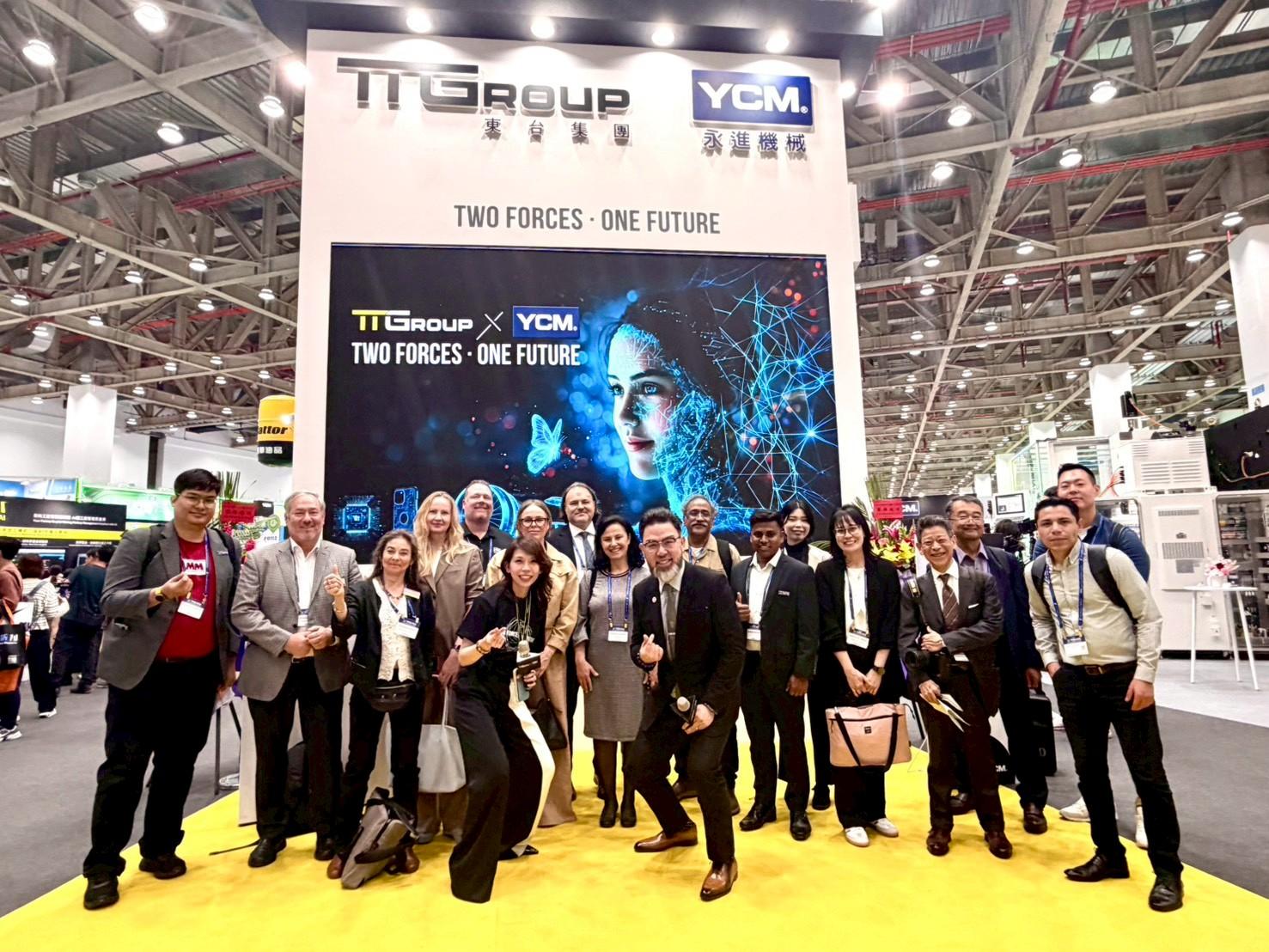 Every decision made on the manufacturing floor can directly impact machining efficiency, process stability, and delivery cost. As artificial intelligence continues to be introduced into factory operations, smart manufacturing is no longer merely about equipment upgrades. Instead, it has become a critical enabler that supports manufacturing decisions, reduces uncertainty, and accelerates problem solving. At the Taiwan International Machine Tool Show (TMTS 2026), TT Group & Yeong Chin Machinery Industries Co, Ltd (YCM) presented its solutions from a holistic manufacturing workflow perspective. By collaborating with multiple technology partners, the showcase goes beyond a single-machine display to demonstrate an integrated solution ecosystem.
The exhibition content focuses on key stages before, during, and after machining, enabling visitors to better understand real-world manufacturing scenarios and how different technologies connect and support one another throughout the process. More importantly, it highlights how ecosystem integration can be translated into practical manufacturing applications that create tangible value across industries.
Empowered by an AI-driven ecosystem framework, this exhibition focuses on addressing key manufacturing challenges in four major industries and presents corresponding integrated solution approaches. Within this framework, AI-CAM and Digital Twin play critical roles in machining planning and virtual-physical integration. These technologies serve as essential foundations of the overall solution, enabling manufacturing decisions to be validated and optimized before actual production begins. Through simulation and comparison within a digital environment, manufacturers can make more informed decisions when facing complex parts, evolving production requirements, or new machining processes—effectively shortening implementation time while improving overall resource utilization.
Furthermore, the integration of smart management and smart service solutions connects factory operations with management systems through digital platforms and tools developed by partners such as DOT ZERO Intelligence Manufacturing. This integration enables machine operations, process conditions, and related production information to be systematically organized and utilized. Rather than remaining fragmented data points, these insights become a valuable foundation for daily management and operational decision-making.